

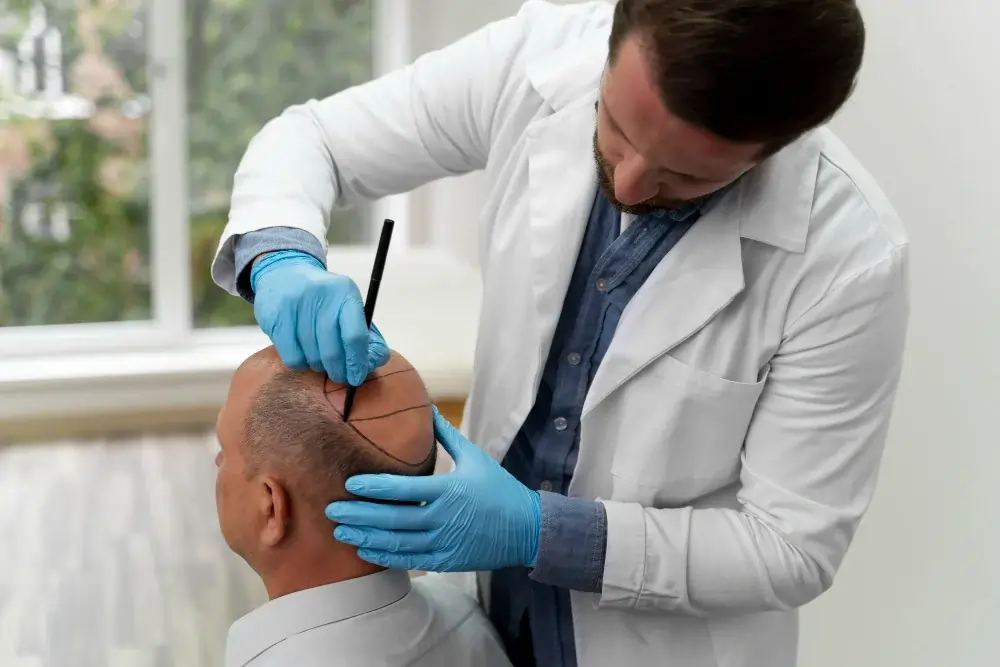
Hair Transplant Recovery Timeline: Day-by-Day Guide from Surgery to Full Growth
You have done the research, chosen your clinic, and finally taken the step. The transplant is done. Now comes the part nobody prepares you for — the waiting. What happens on Day 3? Why is your hair falling out in Week 4? When will you actually see results?
If you have just had a hair transplant or are planning one in Ahmedabad, this guide walks you through the complete recovery journey, day by day and month by month. At Morph Aesthetic, we walk every patient through this exact timeline before the procedure, because knowing what is normal — and what is not — removes 90% of post-transplant anxiety.
Quick Overview: The Recovery Journey at a Glance
Phase | Timeline | What Happens |
Immediate recovery | Day 0–7 | Swelling, scabbing, tenderness |
Scab shedding | Day 7–14 | Scabs fall off, redness fades |
Shock loss | Week 3–8 | Transplanted hair sheds (normal!) |
Dormant phase | Month 2–3 | Little visible change |
Early growth | Month 4–6 | New thin hairs appear |
Thickening | Month 6–9 | Density improves visibly |
Final results | Month 12–18 | Full, mature growth |
Now let’s break down each phase in detail.
Day 0: The Day of Surgery
The procedure itself — whether FUE or DHI — is done under local anaesthesia. You will be awake, and most patients describe it as more tedious than painful. Once it is complete:
- Your scalp will feel tight and numb
- The donor area (usually the back of the head) may be bandaged
- The recipient area will show tiny red dots where grafts were placed
- You will be given medications: antibiotics, mild painkillers, and sometimes a short course of anti-swelling medication
What to do: Go home, rest, and sleep with your head elevated at about 45 degrees. Avoid touching the grafts. Your clinic should give you a written aftercare sheet — follow it exactly.
Days 1–3: Swelling and Tenderness
This is when most patients feel the most discomfort, though it is usually mild.
- Swelling may appear on the forehead and around the eyes by Day 2–3. This is gravity pulling the anaesthetic fluid downward — it looks alarming but is harmless and settles within 2–4 days.
- The donor area may feel sore or itchy.
- Tiny crusts begin forming around each graft.
What to do:
Sleep elevated, apply cold compresses to the forehead (never on the grafts), and avoid bending forward, lifting heavy objects, or any activity that raises blood pressure to the head.
What to avoid: Alcohol, smoking, and blood-thinning medication (unless your doctor says otherwise). Smoking in particular restricts blood flow to the grafts and can genuinely reduce graft survival.
Days 4–7: First Wash and Scab Formation
Around Day 3–5, your clinic will guide you through your first hair wash — usually with a mild baby shampoo, poured gently in a cup rather than under direct shower pressure.
By the end of Week 1:
- Scabs are fully formed over each graft
- Redness starts to reduce
- Numbness may persist (this is normal and can last a few weeks)
- Most patients return to desk jobs by Day 3–5
Key rule for this week: Do not pick, scratch, or rub the scabs. The grafts are anchoring into their new blood supply during Days 1–10, and physical trauma in this window is the biggest avoidable cause of graft failure.
Days 7–14: Scabs Shed, Scalp Normalises
This is the satisfying phase. With gentle daily washing, the scabs begin loosening and falling away — usually completely gone by Day 10–14. Some short transplanted hairs may fall out along with the scabs. Do not panic; the follicle root stays safely under the skin.
By Day 14:
- The recipient area looks like a short, even buzz cut
- Redness has largely faded (fair-skinned patients may see pinkness a little longer)
- Most restrictions lift — light exercise can usually resume around Day 10–14 with your surgeon’s approval
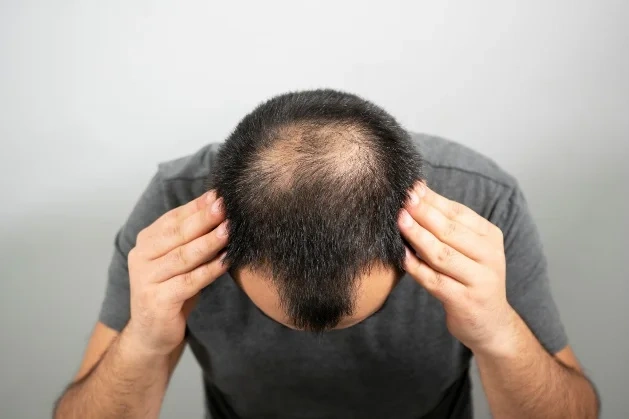
Weeks 3–8: Shock Loss — The Phase That Scares Everyone
Here is the part every patient must understand in advance: most of your newly transplanted hair will fall out during Weeks 3 to 8. This is called shock loss or shedding phase, and it is completely normal.
Why does it happen? The transplant moves the follicle — the living root — not the hair strand itself. The trauma of relocation pushes the follicle into a temporary resting (telogen) phase. The visible hair sheds, but the root remains alive under the scalp, preparing to produce a new, permanent strand.
At Morph Aesthetic, we tell patients: the hair you see fall in Month 1 was never the result. The result grows later, from the roots that stayed.
Some patients also experience mild shock loss of their existing native hair around the transplanted zone. This too typically recovers within a few months.
Months 2–3: The Dormant Phase
Honestly? This is the most boring — and psychologically hardest — stretch. The transplanted area may look almost the same as before surgery. The follicles are resting under the skin.
What helps during this phase:
- Continue any prescribed medication (many surgeons recommend minoxidil and/or finasteride for men to protect existing hair — only under medical guidance)
- Eat protein-rich food; hair is keratin, and keratin needs protein
- Manage stress and sleep well
- Take a Day 1 photo and resist comparing your scalp daily. Monthly photos tell the real story.
Months 4–6: The First Green Shoots
Somewhere in Month 3–4, you will notice fine, soft, light-coloured hairs emerging — like baby hair. This is the moment patients wait for.
- Growth is uneven at first; some zones sprout before others
- The new hairs are thin and may look wispy
- By Month 6, most patients have visible coverage, though still far from final density
Roughly 50–60% of the final result is typically visible by Month 6.
Months 6–9: Thickening and Maturing
This is where the transformation becomes obvious to other people, not just you.
- Hair strands thicken in diameter
- Texture may initially be curly or wiry — it settles and matures over time
- Density visibly improves month over month
- You can cut, trim, and style the hair normally
Months 12–18: Final Results
By the one-year mark, around 85–90% of the final result is in place. The crown area is famously the slowest region and can continue improving up to 18 months.
At this stage, the transplanted hair behaves exactly like the donor hair it came from — it grows, it can be cut, coloured, and styled, and because donor-area follicles are genetically resistant to DHT (the hormone behind pattern baldness), the result is considered permanent.
Red Flags: When to Call Your Doctor
Recovery is smooth for the vast majority of patients, but contact your clinic immediately if you notice:
- Fever or spreading redness (possible infection)
- Pus or discharge from graft sites
- Severe pain not controlled by prescribed medication
- Bleeding that does not stop with gentle pressure
- Folliculitis — small pimple-like bumps — that persists or spreads
Reputable clinics build follow-up reviews into your treatment plan at Week 2, Month 3, Month 6, and Month 12, so problems get caught early.
7 Tips to Maximise Your Results
- Follow the washing protocol exactly — most graft damage happens in the first 10 days.
- Sleep elevated for the first week to reduce swelling.
- No helmets, caps, or tight headwear until your surgeon clears it (usually a loose cap after Day 7–10).
- Avoid direct sun on the scalp for the first month; use a loose cap outdoors after clearance.
- No gym, swimming, or heavy sweating for at least 2 weeks; no swimming pools for a month (chlorine irritates healing skin).
- Quit smoking for at least a month before and after — it directly affects graft survival.
- Be patient. The single most common “complication” we see is anxiety during the shedding phase. Trust the biology.
FAQs
Recovering Right Starts with Choosing Right
A smooth recovery is not just about aftercare — it starts with surgical quality. Proper graft handling, correct implantation depth, and dense-yet-safe extraction all determine how well your recovery unfolds.
At Morph Aesthetic, Ahmedabad, every hair transplant is performed by qualified specialists with structured post-operative follow-up at every recovery milestone — so you are never left guessing whether what you are seeing is normal.
Considering a hair transplant, or recently had one and have questions about your recovery? Book a consultation at Morph Aesthetic, Ahmedabad — call us or WhatsApp to schedule your visit.
EXCELLENTTrustindex verifies that the original source of the review is Google. Good experiencePosted on GoogleTrustindex verifies that the original source of the review is Google. It is a very good clinic with a very helpful staff and extremely clean. It gives u a personalized experience and comfort like never before❣️Posted on GoogleTrustindex verifies that the original source of the review is Google. good behaviour and nice counsaltuntPosted on GoogleTrustindex verifies that the original source of the review is Google. Had a great experience with dr Ronak and dr dhaval for surgery , sakshi ma’am and dr shruti also served us meticulously.Posted on GoogleTrustindex verifies that the original source of the review is Google. Excellent service and amazing result. Highly recommend morph anesthetic. Professional staff.great care.and a wonderful experience. Best plastic surgeon in Ahmedabad.Posted on GoogleTrustindex verifies that the original source of the review is Google. Very nice service..Posted on GoogleTrustindex verifies that the original source of the review is Google. I recently had my child's surgery done at Morph Aesthetic Clinic by Dr. Dhaval Vanzara and Dr. Ronak Kadia, and I couldn't be happier. Both doctors are exceptionally skilled and professional. Before the procedure, they explained everything to me so clearly, and the final result is exactly what I expected and hoped for. Beyond their expertise, both doctors have a wonderful, kind, and supportive nature. Highly recommend this clinic for their outstanding care and perfect results.Posted on GoogleTrustindex verifies that the original source of the review is Google. Nice and clean work and dr is so humble and passionate for work and so good for attend the patient