
Rhinoplasty (Nose Job): What to Expect Before, During and After Surgery
Introduction
Rhinoplasty is one of the most requested facial procedures, but also one of the most detail-sensitive — small changes in technique produce very different results, and recovery involves a longer timeline than many expect. This guide walks through what actually happens at each stage.
Why People Get Rhinoplasty
- Aesthetic reasons — refining nose size, shape, or symmetry to better balance facial features
- Functional reasons — correcting breathing issues, often from a deviated septum, sometimes combined with aesthetic goals in the same procedure
- Revision cases — correcting or refining results from a previous rhinoplasty
A good consultation clarifies which goals are realistic for your specific nasal anatomy and skin type — skin thickness, in particular, significantly affects how visible the final result will be.
Before Surgery: The Consultation
- Discussion of goals and realistic expectations based on your facial structure
- Physical examination of nasal structure, skin thickness, and breathing function
- Digital imaging or visualization tools, where available, to discuss possible outcomes (understood as an illustration, not a guarantee of exact results)
- Review of medical history and any prior nasal surgery or trauma
The Procedure
Rhinoplasty is typically performed under general or local anesthesia with sedation, using one of two approaches:
- Closed rhinoplasty — incisions made inside the nostrils, no external scarring
- Open rhinoplasty — a small incision across the columella (the tissue between the nostrils), used for more complex reshaping, leaving minimal, well-hidden scarring
The surgeon reshapes cartilage and bone to achieve the planned outcome, and surgery duration varies based on complexity — straightforward cases take less time than revision or combined functional-aesthetic procedures.
Recovery Timeline
- First week: Splint/cast in place, noticeable swelling and bruising around the eyes, typically improving significantly within the first 7–10 days
- 2–3 weeks: Most visible bruising resolves; many patients feel comfortable in social settings
- 1–2 months: Residual swelling continues to subside; the nose begins looking closer to its final shape
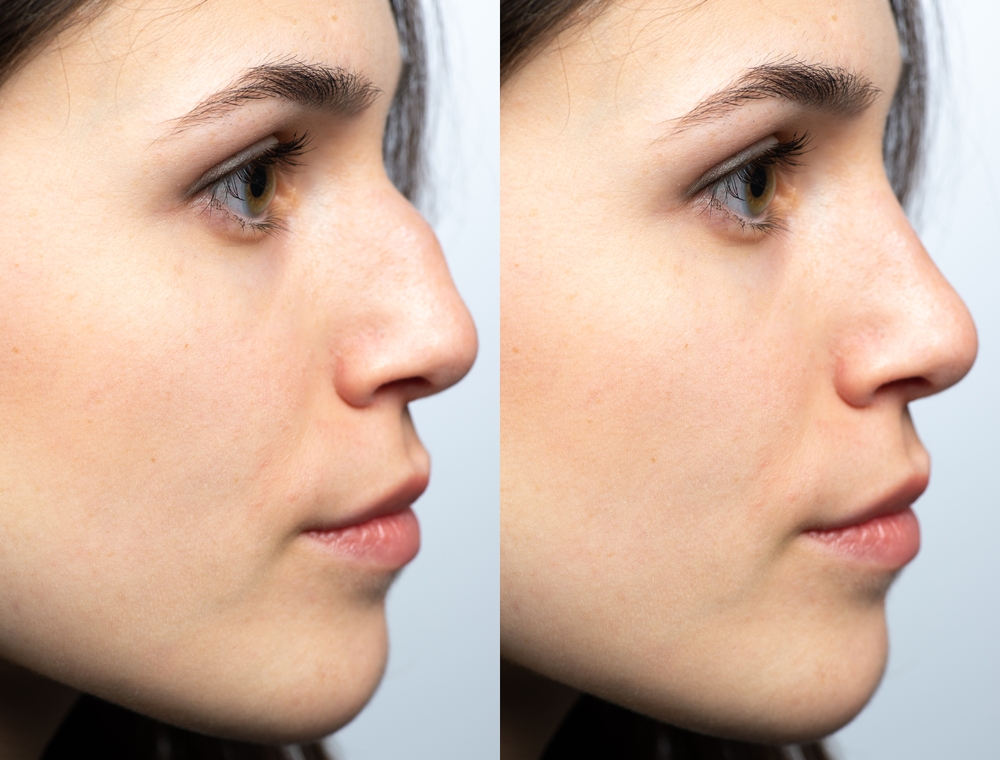
- 6–12 months: Subtle swelling can persist, especially at the tip, with the fully refined final result emerging gradually over this period
This gradual timeline is one of the most important things patients should understand upfront — the nose will look different (and better) at 2 weeks, 2 months, and a year post-surgery.
Questions to Ask Your Surgeon
- Will this be an open or closed approach, and why, given my specific case?
- Are there functional (breathing) concerns that should be addressed alongside the aesthetic goals?
- What’s a realistic timeline for seeing the final result?
- What’s your experience with cases similar to mine, and can I see relevant before/after examples?
Frequently Asked Questions
Book a consultation with Dr. Dhaval Vanzara or Dr. Ronak Kadia, or learn more about Rhinoplasty at Morph Aesthetic.
EXCELLENTTrustindex verifies that the original source of the review is Google. Good experiencePosted on GoogleTrustindex verifies that the original source of the review is Google. It is a very good clinic with a very helpful staff and extremely clean. It gives u a personalized experience and comfort like never before❣️Posted on GoogleTrustindex verifies that the original source of the review is Google. good behaviour and nice counsaltuntPosted on GoogleTrustindex verifies that the original source of the review is Google. Had a great experience with dr Ronak and dr dhaval for surgery , sakshi ma’am and dr shruti also served us meticulously.Posted on GoogleTrustindex verifies that the original source of the review is Google. Excellent service and amazing result. Highly recommend morph anesthetic. Professional staff.great care.and a wonderful experience. Best plastic surgeon in Ahmedabad.Posted on GoogleTrustindex verifies that the original source of the review is Google. Very nice service..Posted on GoogleTrustindex verifies that the original source of the review is Google. I recently had my child's surgery done at Morph Aesthetic Clinic by Dr. Dhaval Vanzara and Dr. Ronak Kadia, and I couldn't be happier. Both doctors are exceptionally skilled and professional. Before the procedure, they explained everything to me so clearly, and the final result is exactly what I expected and hoped for. Beyond their expertise, both doctors have a wonderful, kind, and supportive nature. Highly recommend this clinic for their outstanding care and perfect results.Posted on GoogleTrustindex verifies that the original source of the review is Google. Nice and clean work and dr is so humble and passionate for work and so good for attend the patient