


Can Gynecomastia Go Away With Gym and Exercise? When Surgery May Be Needed
If you have been working out regularly but still notice a puffy or enlarged chest, you may wonder:
Can exercise get rid of gynecomastia?
It is one of the most common questions among men dealing with chest enlargement. The answer depends largely on what is causing the enlarged appearance.
Exercise and weight loss can reduce chest fat and improve muscle definition. However, true gynecomastia involves enlargement of male breast glandular tissue, which generally cannot be removed through exercise alone.
Understanding the difference between chest fat and gynecomastia is therefore an important first step before deciding what to do next.
What Is Gynecomastia?
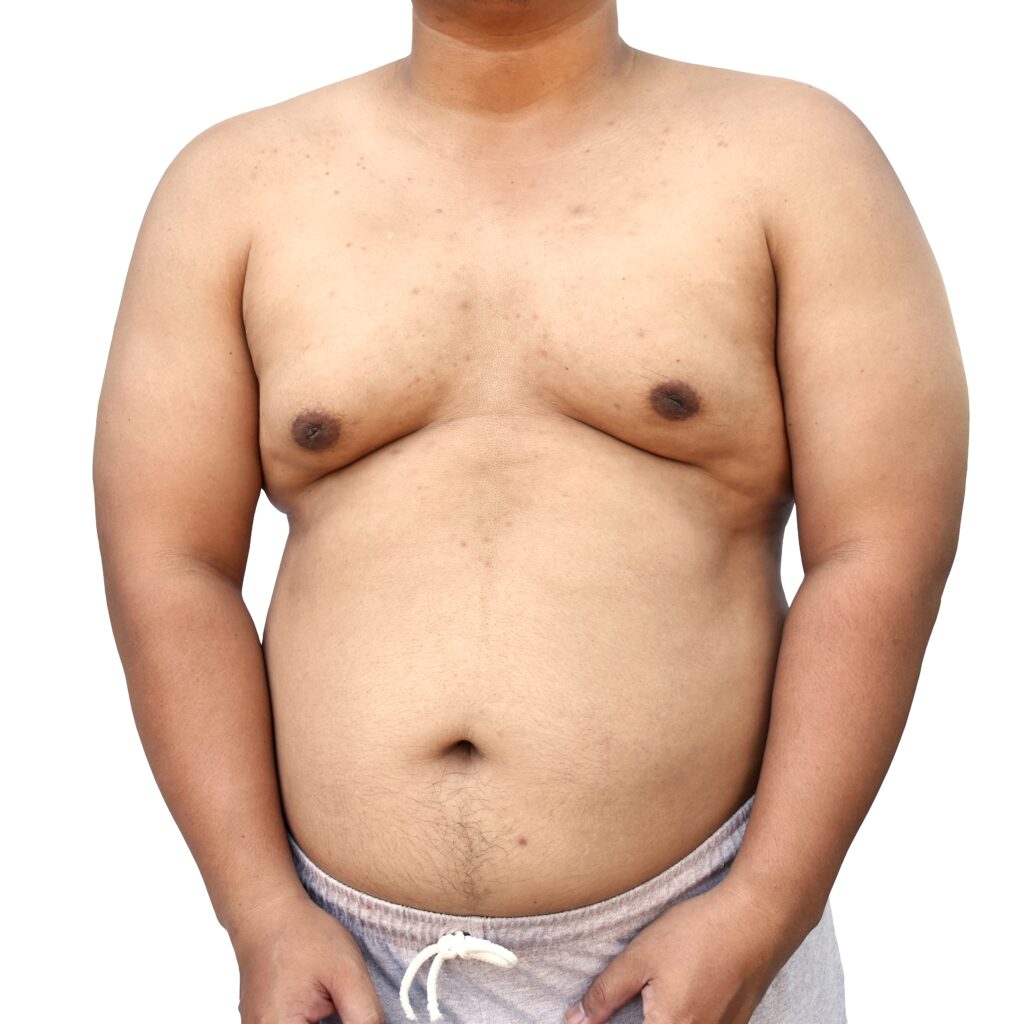
Gynecomastia is the enlargement of male breast tissue caused by growth of glandular tissue.
It may affect:
- One side of the chest
- Both sides
- The area directly beneath the nipple
- A larger portion of the chest
Some men notice only mild puffiness around the nipples, while others develop more noticeable breast enlargement.
Gynecomastia can occur at different ages and may be associated with hormonal changes, certain medications, health conditions or other factors.
Gynecomastia vs Chest Fat: What’s the Difference?
This distinction is particularly important when discussing exercise.
Not every enlarged male chest is true gynecomastia.
An enlarged chest caused predominantly by excess fatty tissue is sometimes referred to as pseudogynecomastia.
Chest Fat or Pseudogynecomastia
The enlargement is primarily related to excess fat.
When overall body fat decreases through appropriate nutrition and physical activity, the chest may also become smaller.
True Gynecomastia
True gynecomastia involves glandular breast tissue.
Losing weight can reduce surrounding fat and improve chest contour, but established glandular tissue may remain.
Some patients can also have both excess fat and glandular tissue, which means the appearance of the chest may improve after weight loss without disappearing completely.
Can Gym Get Rid of Gynecomastia?
Exercise is excellent for overall health, body composition and chest muscle development.
But exercise cannot selectively burn glandular breast tissue.
If chest enlargement is primarily caused by excess body fat, losing weight may significantly improve its appearance.
If glandular tissue is responsible for the enlargement, exercises such as bench presses, push-ups or chest flyes may strengthen the underlying pectoral muscles but will not directly remove the gland itself.
This explains why some men develop a strong, muscular chest but continue to notice puffy nipples or localized fullness.
Can Chest Exercises Make Gynecomastia Less Visible?
They can sometimes improve the overall appearance of the chest.
Exercises targeting the pectoral muscles can build muscle and create better chest definition.
Common exercises include:
- Push-ups
- Bench presses
- Incline presses
- Chest flyes
- Dips
- Cable crossovers
However, the results depend on the cause of the enlargement.
If excess fat is the main issue, exercise combined with appropriate nutrition may produce noticeable improvement.
If significant glandular tissue is present, increasing muscle size does not remove that tissue.
In some cases, developing larger pectoral muscles may even make persistent glandular fullness more noticeable.
Can Weight Loss Cure Gynecomastia?
Weight loss can be beneficial when excess fat contributes to the appearance of the chest.
As overall body fat decreases, fatty tissue around the chest may also reduce.
However, weight loss does not specifically target breast gland tissue.
This means a person can become considerably leaner while still having:
- Puffy nipples
- Firm tissue beneath the nipple
- Localized chest protrusion
- Asymmetry between the two sides
Persistent enlargement despite achieving a healthy, stable body weight is one reason someone may choose to seek a medical evaluation.
How Can You Tell If You Have Gynecomastia or Just Chest Fat?
It can be difficult to diagnose yourself accurately.
Some general differences can provide clues, but they should not replace a clinical examination.
Chest Fat May Feel:
- Soft and diffuse
- Spread more evenly across the chest
- Associated with higher overall body fat
Gynecomastia May Present As:
- A rubbery or firm area beneath or around the nipple
- Persistent nipple puffiness
- Localized enlargement
- Enlargement that remains despite weight loss
However, these signs are not sufficient for a definitive diagnosis.
A qualified doctor can examine the chest and determine whether the enlargement is predominantly glandular tissue, fatty tissue or a combination of both.
Why Does Gynecomastia Happen?
Gynecomastia is associated with an imbalance between the effects of estrogen and androgens on breast tissue.
Several factors can contribute.
Hormonal Changes
Hormonal changes during puberty are a common cause of gynecomastia.
Pubertal gynecomastia often improves naturally over time, although persistent cases can occur.
Hormonal changes later in life may also contribute.
Certain Medications
Some medications have been associated with gynecomastia.
If you suspect a medicine is contributing to breast enlargement, do not stop taking prescribed medication on your own. Discuss it with the prescribing doctor first.
Health Conditions
Certain medical conditions can affect hormone balance and contribute to gynecomastia.
This is another reason new or unexplained breast enlargement deserves appropriate medical evaluation.
Substance Use
Anabolic steroids and certain other substances may contribute to gynecomastia in some individuals.
Does Gynecomastia From Puberty Go Away?
Pubertal gynecomastia is common and frequently resolves without surgical treatment.
According to clinical guidance, many adolescent cases regress naturally over time.
Because of this, surgery is not automatically the first treatment for a teenager who develops gynecomastia.
A doctor may recommend observation depending on age, duration, severity, symptoms and underlying cause.
Persistent gynecomastia that continues beyond the expected period should be assessed individually.
When Should You See a Doctor for Gynecomastia?
You should consider medical evaluation if chest enlargement:
- Persists for a long period
- Is painful or tender
- Develops suddenly
- Is significantly different on one side
- Continues despite weight loss
- Causes substantial physical discomfort
- Is accompanied by a breast lump, nipple discharge or skin changes
A doctor may take a medical history, review medications and perform a physical examination.
Additional investigations may be recommended when clinically necessary.
The purpose is not simply to confirm the appearance of gynecomastia, but also to determine whether an underlying cause needs attention.
When Is Gynecomastia Surgery Considered?
Surgery may be considered for persistent gynecomastia when glandular tissue or excess tissue remains and the condition is causing significant concern.
The decision is individualized.
Factors considered can include:
- Amount of glandular tissue
- Amount of fatty tissue
- Skin elasticity
- Chest shape
- Degree of enlargement
- Asymmetry
- Duration of gynecomastia
- Medical history
- Patient expectations
The surgeon can then determine which surgical approach is appropriate.
Liposuction vs Gland Removal for Gynecomastia
Gynecomastia surgery does not look exactly the same for every patient.
The approach depends on the type of tissue causing the enlargement.
Liposuction
Liposuction can be used to remove excess fatty tissue and improve chest contour when fat is an important component.
However, liposuction alone may not adequately address firm glandular tissue.
Gland Excision
When significant glandular tissue is present, surgical excision may be required.
An incision is commonly positioned around part of the areola so the surgeon can access and remove the glandular tissue.
Combination Treatment
Many patients have both excess fat and glandular tissue.
In these cases, the surgeon may use liposuction together with gland excision to create a more balanced chest contour.
The appropriate technique should be determined after physical examination.
Will Gynecomastia Return After Surgery?
The tissue removed during surgery does not simply regenerate in the same way as body fat.
However, future chest enlargement can still occur under certain circumstances.
Factors that may contribute include:
- Significant weight gain
- Hormonal changes
- Certain medications
- Anabolic steroid use
- Untreated underlying medical conditions
Maintaining a stable weight and addressing relevant medical causes can therefore remain important after treatment.
How Long Is Recovery After Gynecomastia Surgery?
Recovery varies according to the extent of surgery and the individual patient.
Swelling, bruising and temporary discomfort are expected during the early recovery period.
Patients may also be advised to wear a compression garment to support healing and help control swelling.
Return to work and exercise should follow the surgeon’s specific instructions rather than a fixed timeline found online.
Heavy chest workouts should not be resumed until the surgeon confirms that healing is adequate.
Should You Try Exercise Before Considering Surgery?
For someone who is overweight or has significant overall body fat, improving fitness and reaching a healthy, stable weight can be a sensible first step.
It can:
- Reduce excess chest fat
- Improve muscle definition
- Improve general health
- Make the underlying chest contour easier to evaluate
But endlessly increasing chest workouts is unlikely to solve persistent glandular gynecomastia.
If you are already at a healthy weight and chest enlargement remains, a professional assessment can help clarify whether glandular tissue is present.
Gynecomastia Surgery in Ahmedabad at Morph Aesthetic
If persistent chest enlargement is not improving despite exercise and weight management, understanding the underlying tissue is the next step.
At Morph Aesthetic, gynecomastia assessment focuses on determining whether the enlarged chest is caused by excess fat, glandular tissue or a combination of both.
Based on the examination, an individualized treatment plan can be discussed.
If you are concerned about persistent gynecomastia, schedule a consultation with Morph Aesthetic in Ahmedabad to understand the treatment options suitable for your condition.
Frequently Asked Questions
EXCELLENTTrustindex verifies that the original source of the review is Google. Good experiencePosted on GoogleTrustindex verifies that the original source of the review is Google. It is a very good clinic with a very helpful staff and extremely clean. It gives u a personalized experience and comfort like never before❣️Posted on GoogleTrustindex verifies that the original source of the review is Google. good behaviour and nice counsaltuntPosted on GoogleTrustindex verifies that the original source of the review is Google. Had a great experience with dr Ronak and dr dhaval for surgery , sakshi ma’am and dr shruti also served us meticulously.Posted on GoogleTrustindex verifies that the original source of the review is Google. Excellent service and amazing result. Highly recommend morph anesthetic. Professional staff.great care.and a wonderful experience. Best plastic surgeon in Ahmedabad.Posted on GoogleTrustindex verifies that the original source of the review is Google. Very nice service..Posted on GoogleTrustindex verifies that the original source of the review is Google. I recently had my child's surgery done at Morph Aesthetic Clinic by Dr. Dhaval Vanzara and Dr. Ronak Kadia, and I couldn't be happier. Both doctors are exceptionally skilled and professional. Before the procedure, they explained everything to me so clearly, and the final result is exactly what I expected and hoped for. Beyond their expertise, both doctors have a wonderful, kind, and supportive nature. Highly recommend this clinic for their outstanding care and perfect results.Posted on GoogleTrustindex verifies that the original source of the review is Google. Nice and clean work and dr is so humble and passionate for work and so good for attend the patient