

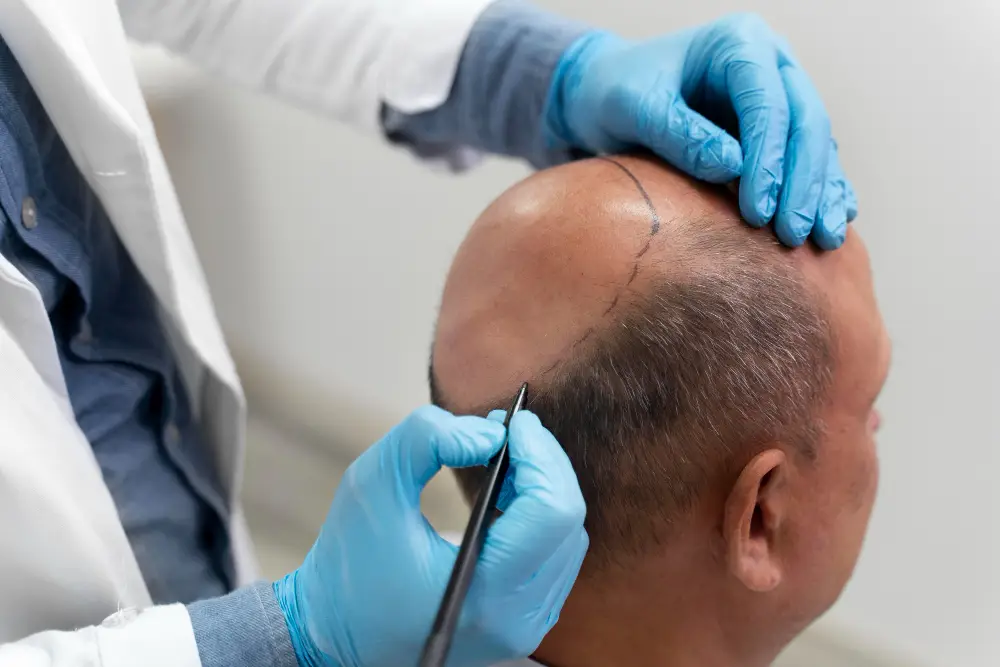
Best Hair Transplant Surgeon in Ahmedabad: What to Look For Before You Decide
If you have spent time researching hair transplant in Ahmedabad, you have probably noticed one thing — there is no shortage of options. A Google search returns dozens of clinics, each claiming to offer the best results, the most advanced techniques, and the most experienced surgeons. Prices range from surprisingly affordable to considerably premium. Before and after photographs look compelling across the board.
So how do you actually find the best hair transplant surgeon in Ahmedabad — the one whose hands you can trust with a procedure that is permanent, visible, and deeply personal?
The answer lies not in marketing claims or clinic aesthetics, but in a specific set of qualifications, questions, and criteria that separate surgeons who consistently deliver natural, dense, permanent results from those who produce outcomes that disappoint or require costly correction.
Hair transplant surgery is one of the most technically and artistically demanding procedures in aesthetic medicine. It requires not just surgical skill, but an aesthetic eye for hairline design, an understanding of hair growth physics, experience with different hair types and textures, and the judgment to manage complications when they arise. A hair transplant performed by an inexperienced or inadequately trained surgeon is extremely difficult — and expensive — to reverse or correct.
This guide by Morph Aesthetic is written to help you ask the right questions, evaluate the right criteria, and ultimately make the most informed decision possible before choosing your hair transplant surgeon in Ahmedabad.
1. Why the Surgeon is the Most Important Variable in Hair Transplant Outcome
In hair transplant surgery, the same FUE technique can produce dramatically different results depending entirely on who is performing it. The technique name — FUE, DHI, Sapphire — is a category descriptor, not a quality guarantee. Two clinics can both offer Sapphire FUE and produce outcomes that are worlds apart in naturalness, density, and longevity.
What the Surgeon Controls
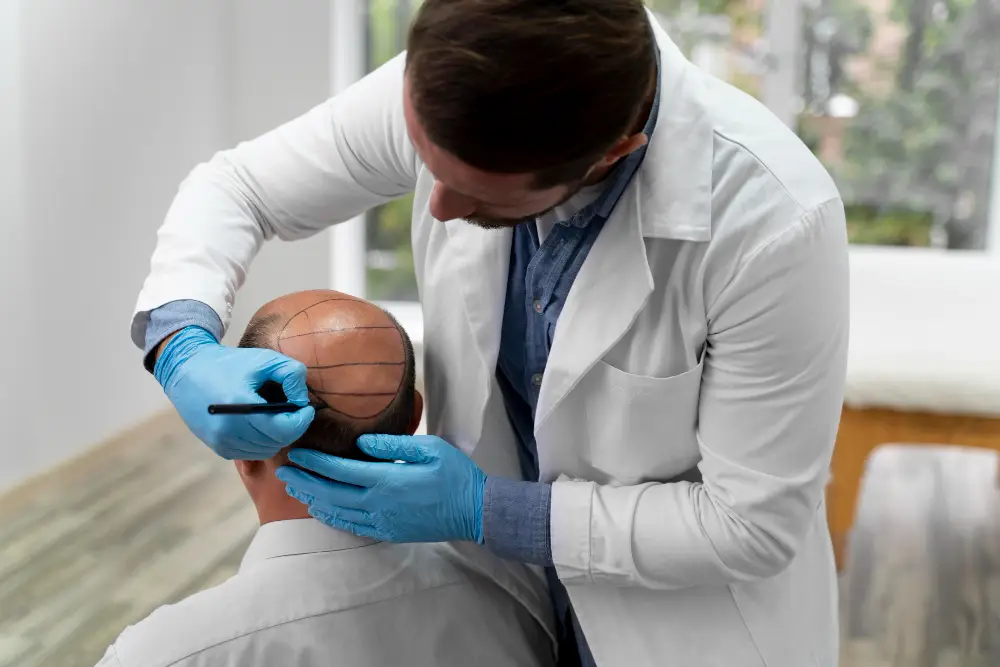
Hairline design: The position, shape, and zone distribution of the transplanted hairline is a purely artistic decision — made by the surgeon before a single graft is placed. A hairline set too low looks artificial. One that is too straight looks transplanted. The right hairline respects your facial proportions, age, existing hair loss pattern, and likely future progression. This is where artistic judgment is irreplaceable.
Graft extraction quality: The punch size, depth, angle, and speed of extraction directly affect whether grafts come out intact with their full follicular unit — or transected and damaged. Experienced surgeons achieve transection rates below 3 to 5 percent. Inexperienced operators routinely damage 15 to 25 percent of grafts during extraction — grafts that are paid for but will never grow.
Recipient site creation: The angle, depth, and direction of each recipient incision determines how naturally the transplanted hair grows and flows. Correct angulation — matching the natural growth angle of adjacent hair — is what makes the result indistinguishable from natural hair.
Graft implantation: The handling, placement depth, and spacing of each graft during implantation requires consistent precision across thousands of repetitions in a single session. Fatigue, carelessness, or insufficient experience shows in patchy density and inconsistent growth.
2. Qualifications to Look for in a Hair Transplant Surgeon in Ahmedabad
(i) Medical Degree and Recognised Specialisation
Your hair transplant surgeon should hold an MBBS degree from a recognised institution and have postgraduate training — MS, MCh, or DNB — in plastic surgery, cosmetic surgery, or dermatology. These specialisations provide the foundational surgical training that hair transplant procedures require.
Be wary of practitioners offering hair transplant services based solely on short certificate courses in hair restoration without a recognised surgical or dermatological specialisation.
(ii) Fellowship or Advanced Training in Hair Restoration
Postgraduate specialisation gives you a foundation — dedicated fellowship or advanced training in hair restoration surgery gives you expertise. Look for surgeons who have completed formal training in FUE and DHI hair transplant techniques under a recognised mentor, or who have attended accredited international hair restoration workshops and are members of professional bodies such as the International Society of Hair Restoration Surgery (ISHRS) or the Association of Hair Restoration Surgeons of India (AHRSI).
(iii) Documented Experience — Number of Procedures Performed
Ask specifically how many hair transplant procedures the surgeon has performed — and across what range of grades and session sizes. A surgeon who has performed 500+ hair transplants across all Norwood grades has a breadth of experience that a surgeon with 50 to 100 procedures simply cannot match in managing complexity, complications, and demanding aesthetic goals.
(iv) Specialisation vs General Practice
A surgeon who performs hair transplants as one of many procedures they offer is different from a surgeon for whom hair restoration is a primary focus. Dedicated specialisation in hair transplant typically correlates with higher procedure volumes, more refined technique, and stronger outcomes — particularly for complex cases.
3. Key Questions to Ask Your Hair Transplant Surgeon Before Booking
(i) Who exactly will perform my procedure — the surgeon or technicians?
This is the single most important question and the one most clinics hope you will not ask. Many clinics advertise a named senior surgeon but perform the majority of the extraction and implantation using trained technicians under supervision. Ask explicitly whether the surgeon will personally perform the extraction, site creation, and implantation — or whether technicians will handle these steps.
(ii) How many grafts do I actually need, and how did you arrive at that number?
A qualified surgeon estimates graft requirements based on your specific baldness grade, donor density measured by trichoscopy, the area to be covered, and the desired density. If a surgeon quotes your graft count without a detailed scalp examination, be cautious — it suggests the estimate is based on a standard template rather than your individual anatomy.
(iii) What is your transection rate?
Transection rate — the percentage of grafts damaged during extraction — is one of the clearest quantitative measures of a surgeon’s technical precision. Experienced surgeons maintain transection rates below 3 to 5 percent. Ask for this figure. A surgeon who does not track or know their transection rate is not monitoring their own quality.
(iv) Can I see before and after results from cases similar to mine?
Ask to see results from patients with your specific hair type, baldness grade, and target goal — not just the best case highlights. A portfolio of consistent results across different patients is far more meaningful than a single extraordinary outcome.
(v) What happens if my result is not satisfactory?
How a clinic answers this question tells you a great deal about their confidence in their outcomes and their commitment to patient satisfaction. A reputable clinic will have a clear policy on revision consultations and will stand behind their results.
4. Red Flags — Warning Signs to Watch for When Choosing a Hair Transplant Surgeon
Unusually Low Per-Graft Pricing
Per-graft pricing in India below ₹20 to ₹25 almost always means significant compromises — technician-led procedures, no Graft Chiller, low-quality extraction tools, or inadequately trained staff. Hair transplant pricing below a certain threshold is not a deal — it is a risk.
Guaranteed Graft Count Without Examination
Any clinic that provides a guaranteed graft count, guaranteed density, or specific result promise without having physically examined your scalp and donor area should be approached with extreme caution. Graft count is determined by individual anatomy — it cannot be standardised.
No Consultation With the Operating Surgeon
If your pre-operative consultation is with a counsellor, coordinator, or general physician rather than the surgeon who will actually perform your procedure, you have no basis on which to evaluate the surgeon’s judgment, aesthetic approach, or communication style before committing.
Pressure to Book Immediately With Time-Limited Discounts
Reputable clinics do not pressure patients into booking on the same day as the consultation. A significant, permanent surgical decision deserves considered reflection. Artificial urgency through time-limited pricing is a sales tactic — not a patient-centred approach.
Before and After Photos With No Consistent Patient Base
A portfolio of three to five exceptional results from cherry-picked cases says very little. Look for clinics that can show you a broad, consistent portfolio across different hair types, grades, and demographics — including cases from 12 to 18 months post-procedure when the final result is fully mature.
5. Surgeon vs Technician — The Critical Difference Every Patient Must Understand
This is perhaps the most important distinction in the entire Indian hair transplant industry — and the one that most clinics do not volunteer.
In India, a significant number of hair transplant clinics — including some that market themselves prominently and charge substantial fees — use trained paramedical technicians to perform most of the extraction and implantation steps of the procedure. The surgeon may design the hairline, begin the extraction, and supervise — but the bulk of the surgical work is performed by non-physician staff.
This is not illegal in India — the regulatory framework governing this practice is ambiguous. But from a patient outcome perspective, it matters enormously.
Extraction and implantation are the two steps that most directly determine graft survival rate, naturalness of growth, and final density. When these steps are performed by an experienced surgeon versus a trained technician, the difference in precision, transection rate, implantation angle consistency, and aesthetic judgment is clinically meaningful — particularly in large sessions of 2,500 grafts or more.
At Morph Aesthetic, all hair transplant procedures are performed by our board-certified cosmetic surgeons from start to finish — including every extraction and every graft placement. This is not a marketing claim — it is our standard protocol, and we are transparent about it.
6. How to Evaluate Before and After Results Like an Expert
Most patients look at before and after hair transplant photos and assess them based on the volume of hair grown. But there is a more rigorous way to evaluate these images that reveals far more about the surgeon’s skill.
Naturalness of the Hairline
The hairline should have an irregular, feathered appearance — not a sharp, defined line. Single hair follicles should be placed at the very front of the hairline, with progressively denser multi-hair grafts placed behind. A hairline that looks too straight, too low, or too uniform was either designed poorly or implanted with insufficient attention to graft density gradation.
Absence of the Plug or Doll Effect
Older techniques and inexperienced surgeons sometimes produce results where individual grafts are visible as distinct tufts — the plug or doll hair effect. Modern FUE with properly sized punches and correct implantation density should produce completely natural-looking growth with no discernible individual graft units visible to the naked eye.
Donor Area Appearance
The donor area should show no visible scarring, patchiness, or uneven density after FUE. Well-managed donor extraction leaves tiny dot marks that are imperceptible even with a closely cropped haircut. Visible donor area thinning or irregular extraction patterns suggest poor punch management or over-harvesting.
Consistency Across the Portfolio
One exceptional result may be an outlier. Consistent quality across a broad portfolio — different grades, different hair types, different ages, multiple years of results — indicates a surgeon who reliably produces good outcomes regardless of case complexity.
7. The Role of Technology in Surgeon Performance
The best surgeon in the world is further empowered by the right technology. Conversely, advanced technology in the hands of an inexperienced surgeon does not compensate for skill deficiencies. Technology and surgeon expertise must work together.
Motorised FUE System
Motorised or robotic-assisted FUE systems provide more consistent punch depth and rotation speed than manual punches — reducing transection rates in experienced hands. However, the surgeon must still guide placement and depth manually.
Graft Chiller
As discussed in our companion blog on hair transplant in Ahmedabad, the Graft Chiller device maintains harvested grafts at 2°C to 8°C throughout the procedure — dramatically improving graft survival rates in sessions lasting 6 to 8 hours. Surgeons who use a Graft Chiller as standard protocol are demonstrating a commitment to maximising the survival of every single graft they extract.
Sapphire Blades and DHI Implanter Pens
These tools improve the precision and consistency of recipient site creation and graft placement — but only translate into better results when the surgeon using them has the experience to apply them optimally.
Trichoscopy and Scalp Analysis
A surgeon who uses trichoscopy — magnified scalp imaging — to assess donor density, hair calibre, follicular unit distribution, and existing miniaturisation is making data-driven decisions about your graft estimate and transplant plan, rather than relying on visual approximation alone.
8. Hair Transplant Surgeon Cost in Ahmedabad — What Does Experience Cost?
The experience, qualifications, and track record of your surgeon are directly reflected in the per-graft price they charge. Here is how the cost landscape breaks down in Ahmedabad:
- Technician-led clinics with supervising physician: ₹15 – ₹30 per graft
- Surgeon-involved with partial technician assistance: ₹30 – ₹50 per graft
- Fully surgeon-led with advanced technology (FUE, Graft Chiller, Sapphire, DHI): ₹50 – ₹80 per graft
For a 2,500-graft session, the difference between the lowest and highest tier is ₹87,500 to ₹2,00,000. The higher-tier surgeon delivers better graft survival rates, more natural hairline design, and a significantly lower probability of requiring a corrective procedure. When evaluated over the 25-year lifespan of your transplanted hair, the premium for an experienced surgeon-led procedure is one of the best value investments you can make.
9. Meet the Surgeons at Morph Aesthetic — Ahmedabad’s Hair Transplant Specialists
Morph Aesthetic’s hair restoration programme is led by Dr. Dhaval Vanzara and Dr. Ronak Kadia — board-certified cosmetic surgeons with extensive dedicated experience in FUE, DHI, and Sapphire hair transplant techniques.
Dr. Dhaval Vanzara
Dr. Vanzara is a fellowship-trained cosmetic surgeon with specialised training in hair restoration surgery. He has performed hundreds of hair transplant procedures across all Norwood grades — from early hairline recession to advanced baldness requiring large mega-sessions. His approach combines precise technical execution with a refined artistic sensibility for hairline design that produces results indistinguishable from natural hair.
Dr. Ronak Kadia
Dr. Kadia brings complementary expertise in aesthetic surgery with a particular focus on body contouring and hair restoration. His meticulous attention to graft handling, donor area management, and implantation precision contributes directly to the consistently high graft survival rates achieved at Morph Aesthetic.
Together, the surgical team at Morph Aesthetic manages all phases of every hair transplant personally — from hairline design through extraction and implantation to the final graft. No step is delegated to technicians.
10. Frequently Asked Questions
Conclusion
The best hair transplant surgeon in Ahmedabad is not necessarily the one with the most impressive clinic, the most prominent advertisement, or the most competitive price. The best surgeon is the one who operates personally on every patient, has the qualifications and documented experience to manage your specific case, designs a hairline that will look natural for decades — and is completely transparent about every aspect of the procedure.
These qualities exist. They are findable. And they make all the difference between a hair transplant that restores your confidence permanently and one that costs you time, money, and emotional energy to correct.
At Morph Aesthetic, our surgeons are available for personal consultations — where you can meet the hands that will perform your procedure, ask every question you have, and make your decision with complete information and complete confidence.
Book your consultation at morphaesthetic.com today.
Author
Author: Dr. Dhaval Vanzara & Dr. Ronak Kadia Board-Certified Cosmetic Surgeons | Morph Aesthetic, Ahmedabad
EXCELLENTTrustindex verifies that the original source of the review is Google. I visited for my gynecomastia surgery on 20/06/2026, same day i got discharged and didn't feel a thing. Such a professional atmosphere, so comfortable for rest after surgery. I was genuinely surprised to see facility that they provide, Dr.Ronak Kadia been very nice with me, i didn't know anything about my condition theh explained me everything and most importantly they never threaten me like most doctors about my condition. Such a great experience i would say don't think twise and don't be shy about your body condition.Posted onTrustindex verifies that the original source of the review is Google. Very positive experience at the clinic. The surgical consultation was detailed and informative. The doctor understood my concerns and suggested the best approach with care and Professionalism thank you so much dr Dhaval and dr Ronak sirPosted onTrustindex verifies that the original source of the review is Google. I had done my daughters scar revision surgery at morph aesthetics and I'm really happy with thr results. The procedure was explained properly and done very smoothly. My scar appearance has improved and the recovery process was comfortable. Specially thanks to Dr. Dhaval vanzara and Dr. Ronak kadia for their guidance and care throughout the treatment. Highly recommended for anyone looking for scar revision surgery. Best plastic surgeon in Ahmedabad.Posted onTrustindex verifies that the original source of the review is Google. I have a good experience at morph aesthetic. I have done my daughter's collagen dressing. There is a very good experience. Dr. Dhaval Vandana explain everything before dressing.Posted onTrustindex verifies that the original source of the review is Google. ⭐⭐⭐⭐⭐ Exceptional Experience at Morph Aesthetic Clinic! I recently underwent a Yellow Peel treatment at Morph Aesthetic Clinic, and I am extremely happy with my experience and results. From the very first consultation to the post-treatment guidance, everything was handled with utmost professionalism and care. A special thanks to Dr. Dhaval Vanzara and Dr. Ronak Kadia for their expertise, patience, and personalized approach. They took the time to understand my concerns, explained the procedure in detail, and ensured that I felt comfortable throughout the entire process. Their knowledge and attention to detail truly reflect their commitment to delivering the best possible outcomes. The clinic itself is modern, hygienic, and equipped with advanced technology. The staff members are friendly, supportive, and always willing to answer any questions. What impressed me the most was the genuine care and transparency shown by the entire team. The Yellow Peel treatment was performed smoothly, and I have already noticed a visible improvement in my skin texture, tone, and overall glow. The results have exceeded my expectations, and I feel much more confident. I highly recommend Morph Aesthetic Clinic to anyone looking for quality aesthetic treatments. If you’re considering skin or cosmetic procedures, you can trust Dr. Dhaval Vanzara and Dr. Ronak Kadia for their professionalism, skill, and dedication to patient satisfaction. Thank you, Morph Aesthetic Clinic, for such a wonderful experience. I look forward to continuing my skincare journey with your team!Posted onTrustindex verifies that the original source of the review is Google. Dr Dhaval Vanzara is the best plastic surgeon in Ahmedabad with services ranging widely. I had a very positive experience here for hy Hydrafacials & for my Father in law nail issue as well. Very talented, to the point & accurate treatment provided. I would suggest him for all your ‘awsthetic’ worries ☺️Posted onTrustindex verifies that the original source of the review is Google. I have visited Morph aesthetic clinic recently. Both doctors, Dr. Dhaval Vanzara sir and Dr Ronak kadia sir are very skilled person. They explain the condition in detail. The clinic is well maintained, and have luxurious interior. Staff members are very polite. One of the best clinic and best plastic surgeons in the Ahmedabad.Posted onTrustindex verifies that the original source of the review is Google. Wonderful experience
Post a comment