

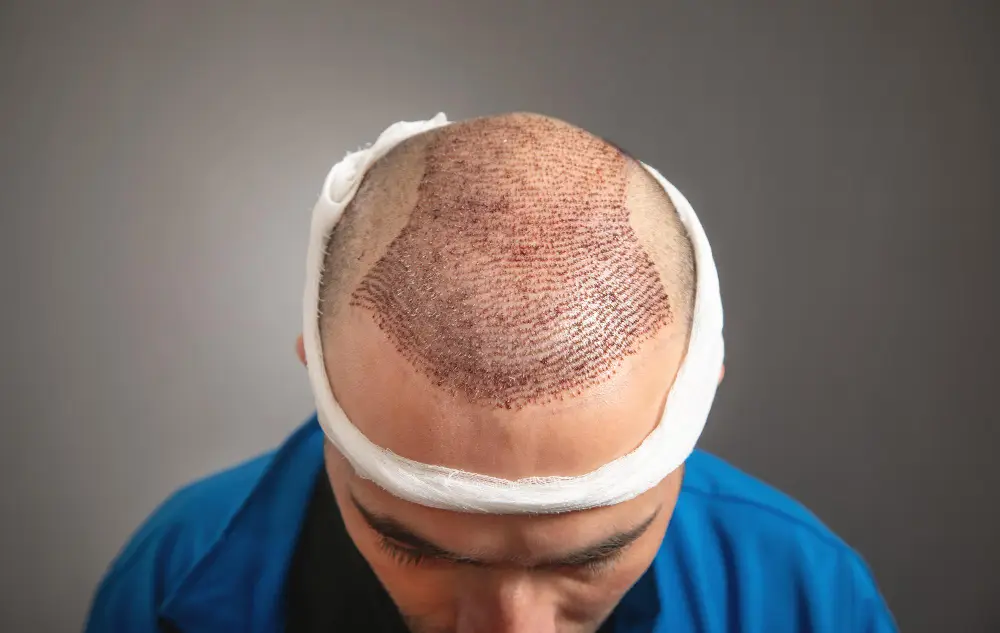
Hair Transplant Graft Calculator: How Many Grafts Do You Need Based on Your Baldness Grade?
3 simple steps to estimate your grafts & cost
If you are researching hair transplants in Ahmedabad, one of your first questions is almost certainly: how many grafts will I need?
It is a sensible first question. The number of grafts directly determines the cost of your procedure, the complexity of the surgery, and whether your donor area can supply what is needed for the coverage you want.
This guide gives you a practical framework for estimating your graft requirement based on your baldness grade — and explains what influences actual graft needs beyond the grade alone.
Important: This is a guide to help you understand the variables involved. Only an in-person consultation with Dr. Ronak Kadia or Dr. Dhaval Vanzara at Morph Aesthetic, Ahmedabad, can provide an accurate graft count — because donor density, hair characteristics, and scalp laxity must be assessed individually.
How Grafts Are Counted
Before the numbers, a critical distinction:
Graft ≠ Hair
A graft is a follicular unit — a naturally occurring group of hair follicles as they exist in your scalp. Most follicular units contain 1–4 hairs.
- 1-hair grafts: typically placed at the hairline for a natural appearance
- 2-hair grafts: placed behind the hairline
- 3–4 hair grafts: placed in the crown and mid-scalp for density
Because each graft contains multiple hairs, transplanting 2,000 grafts does not give you 2,000 hairs — it gives you approximately 4,000–6,000 hairs (depending on average hair-per-graft in your specific donor area).
The Norwood Scale: Measuring Male Pattern Baldness
The Norwood-Hamilton Scale is the standard classification for male pattern hair loss — a 7-grade system from minimal recession to complete baldness:
| Norwood Grade | Description | Visual Pattern |
|---|---|---|
| Grade I | No significant recession. Full natural hairline. | No visible hair loss |
| Grade II | Slight recession at the temples forming triangular corners. | Minimal hair loss |
| Grade III | Deeper recession at the temples. First clear sign of baldness. | Mild hair loss |
| Grade III Vertex | Additional thinning begins at the crown. | Mild to moderate hair loss |
| Grade IV | Significant recession with noticeable crown thinning. | Moderate hair loss |
| Grade V | Larger crown baldness with a narrow hair bridge remaining. | Moderate to severe hair loss |
| Grade VI | Temple recession and crown baldness merge together. | Severe hair loss |
| Grade VII | Only a horseshoe-shaped band of hair remains. | Extensive hair loss |
The Norwood Scale: Measuring Male Pattern Baldness
The following estimates are based on average graft requirements at each stage. Actual requirements vary significantly by individual scalp characteristics.
Grade I — Early Recession
- Area to cover: Temples and hairline refinement
- Estimated grafts: 500–1,500
- Coverage goal: Restore natural hairline, fill receded corners
- Donor requirement: Low — manageable in a single session
- Approximate cost at Morph Aesthetic: ₹25,000–₹75,000
Grade II — Moderate Recession
- Area to cover: Temples + hairline
- Estimated grafts: 1,500–2,500
- Coverage goal: Restore natural frontal hairline with appropriate density
- Donor requirement: Moderate
- Approximate cost: ₹75,000–₹1,25,000
Grade III Vertex — Recession + Crown Beginning
- Area to cover: Hairline + early crown
- Estimated grafts: 2,000–3,000
- Coverage goal: Frontal restoration + initial crown coverage
- Note: Crown requires more grafts per sq cm to achieve visible density
Grade IV — Significant Recession + Crown Thinning
- Area to cover: Full frontal zone + crown
- Estimated grafts: 2,500–3,500
- Coverage goal: Comprehensive frontal and crown restoration
- Donor requirement: Moderate-high — evaluate donor density carefully
Grade V — Advanced Loss
- Area to cover: Large frontal + crown, losing bridge
- Estimated grafts: 3,500–5,000
- Coverage goal: Maximum coverage with realistic density expectations
- Note: Multiple sessions may be required for complete restoration
- Donor consideration: Requires careful preservation of remaining grafts for potential future sessions
Grade VI — Severe Loss
- Area to cover: Entire top of scalp
- Estimated grafts: 4,500–6,000+
- Coverage goal: Coverage with moderate density — true restoration density not achievable in one session
- Recommendation: Usually requires 2 sessions; crown coverage may involve body hair in some cases
- Approximate cost: ₹2,25,000–₹3,00,000+
Grade VII — Extensive Loss
- Area to cover: Maximum area — horseshoe of donor hair only
- Estimated grafts: 6,000–8,000+ (if donor permits)
- Coverage goal: Conservative coverage of priority zones
- Important note: At Grade VII, donor supply is the limiting factor. Scalp donor area may not provide sufficient grafts for complete coverage. Body hair transplant (BHT) using beard, chest, or body hair may supplement.
For Women: The Ludwig Scale
Female hair loss follows different patterns from male baldness and is classified using the Ludwig Scale:
| Ludwig Grade | Description | Grafts (Estimate) |
|---|---|---|
| Grade I | Mild thinning at the top of the scalp. | 1,000–2,000 |
| Grade II | Moderate diffuse thinning across the scalp. | 2,000–3,500 |
| Grade III | Severe thinning with a visibly widened part line. | 3,500–5,000 |
Female hair transplant planning requires additional consideration of diffuse thinning patterns, donor density, and underlying cause of hair loss — all assessed at consultation with Morph Aesthetic’s surgeons.
Factors That Affect Actual Graft Requirement
The Norwood grade gives a starting point — but these additional factors significantly influence the actual graft count:
1. Donor Hair Density
Patients with high natural donor density have more grafts available and can achieve better recipient density. Low donor density limits both the number of grafts available and the density achievable.
Typical donor density: 60–90 follicular units per sq cm
2. Hair Characteristics
Hair calibre (thickness): Thick, coarse hair provides more visual coverage per graft than fine, thin hair. A patient with thick hair may achieve satisfactory density with 2,000 grafts where a fine-haired patient would need 3,000.
Hair curliness/waviness: Curly or wavy hair provides better coverage than straight hair because it covers more surface area.
Hair colour vs scalp contrast: Dark hair on a fair scalp shows baldness more starkly — more grafts are needed to achieve visual coverage. Grey or blonde hair on similar skin tone requires less density for adequate appearance.
3. Desired Density
Are you looking for coverage (the baldness is not visible in normal lighting) or full density (hair looks thick and full)? Full density requires significantly more grafts than coverage density.
4. Future Hair Loss Trajectory
If you are 28 years old with Grade III loss that is actively progressing — a surgeon who plans only for your current Grade III pattern may leave you with an unnatural-looking island of transplanted hair as native hair recedes further. Planning for future loss is as important as addressing present loss.
Dr. Ronak Kadia and Dr. Dhaval Vanzara at Morph Aesthetic assess hair loss trajectory and design hairlines that remain appropriate as natural ageing continues.
5. Scalp Laxity
Scalp flexibility affects how easily the surgeon can extract grafts and how the scalp responds to procedure. Tight scalps may allow fewer extractions per session.
How Many Sessions Will You Need?
Single session: Sufficient for Grade II–IV with appropriate donor density Two sessions (6–12 months apart): Recommended for Grade V–VII or when maximum density is desired Body Hair Transplant (BHT): When scalp donor supply is exhausted but more grafts are needed — beard, chest, and leg hair can supplement
The Consultation: Where Your Graft Count Is Determined
None of the above estimates substitute for a clinical assessment. At Morph Aesthetic, Ahmedabad, your consultation with Dr. Ronak Kadia or Dr. Dhaval Vanzara includes:
- Hair loss grading (Norwood/Ludwig)
- Donor area density assessment — manual counting and photography
- Hair characteristic evaluation — calibre, texture, contrast
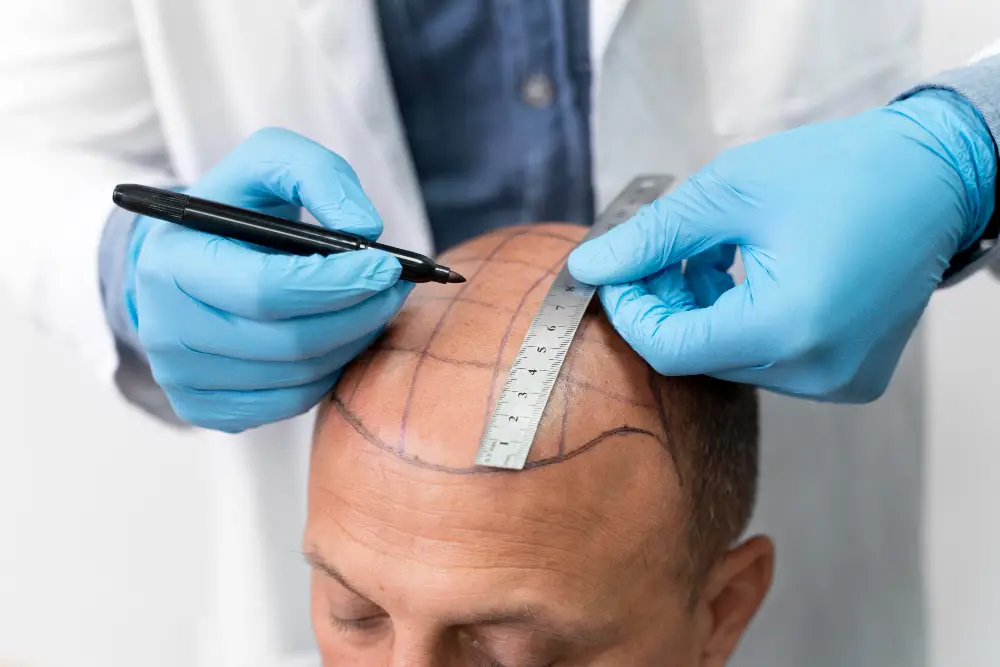
- Recipient area planning — surface area measurement
- Future loss trajectory assessment
- Graft extraction capacity evaluation
- Session planning — how many grafts, how many sessions, what to prioritise
Frequently Asked Questions
Conclusion
Understanding your approximate graft requirement based on your Norwood grade is a valuable first step in planning your hair transplant journey. But numbers on a screen are a starting point, not a prescription.
At Morph Aesthetic, Sola, Ahmedabad, Dr. Ronak Kadia and Dr. Dhaval Vanzara provide personalised graft assessments that account for every variable — delivering a realistic plan for natural, permanent results that work for your specific scalp.
📍 Morph Aesthetic, Sola, Ahmedabad | 🌐 morphaesthetic.com
EXCELLENTTrustindex verifies that the original source of the review is Google. Good experiencePosted on GoogleTrustindex verifies that the original source of the review is Google. It is a very good clinic with a very helpful staff and extremely clean. It gives u a personalized experience and comfort like never before❣️Posted on GoogleTrustindex verifies that the original source of the review is Google. good behaviour and nice counsaltuntPosted on GoogleTrustindex verifies that the original source of the review is Google. Had a great experience with dr Ronak and dr dhaval for surgery , sakshi ma’am and dr shruti also served us meticulously.Posted on GoogleTrustindex verifies that the original source of the review is Google. Excellent service and amazing result. Highly recommend morph anesthetic. Professional staff.great care.and a wonderful experience. Best plastic surgeon in Ahmedabad.Posted on GoogleTrustindex verifies that the original source of the review is Google. Very nice service..Posted on GoogleTrustindex verifies that the original source of the review is Google. I recently had my child's surgery done at Morph Aesthetic Clinic by Dr. Dhaval Vanzara and Dr. Ronak Kadia, and I couldn't be happier. Both doctors are exceptionally skilled and professional. Before the procedure, they explained everything to me so clearly, and the final result is exactly what I expected and hoped for. Beyond their expertise, both doctors have a wonderful, kind, and supportive nature. Highly recommend this clinic for their outstanding care and perfect results.Posted on GoogleTrustindex verifies that the original source of the review is Google. Nice and clean work and dr is so humble and passionate for work and so good for attend the patient